
Cabot Trail
A Clockwise Loop Around Cape Breton's Cabot Trail
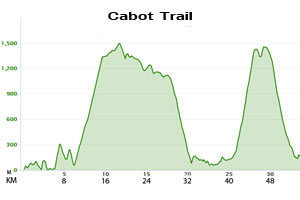
Cabot Trail is a seven-day trip that starts and ends in Sydney, Nova Scotia, on Cape Breton Island. Riders travel through the Gaelic heart of Celtic settlements in Atlantic Canada. Historians still argue about whether Venetian explorer John Cabot made landfall in Cape Breton or Newfoundland on his 1497 voyage financed by an English king. But there is no doubt that the Scots and Irish settlers who came later established a culture of friendliness and music that is evident everywhere in modern Cape Breton.
Ride the Cape Breton Highlands for Stunning Views
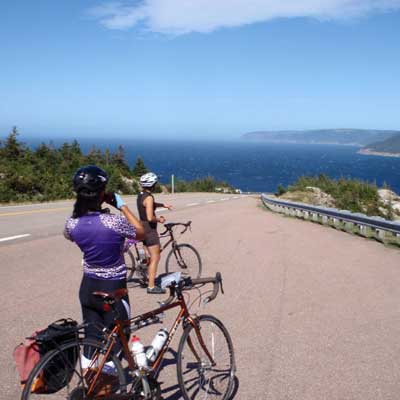
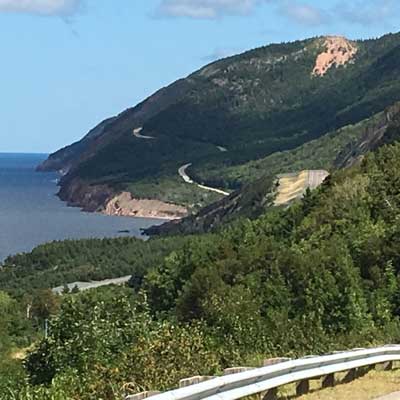
Cabot Trail is a supported tour and accommodation is indoors. There is a rest day in Ingonish, at the southeast corner of Cape Breton Highlands National Park. Cycling is on paved roads. Terrain is hilly, especially on the two days of cycling in the park. Climbs and descents in some sections can be quite steep. Services in some areas can be minimal. Scenery is spectacular, especially along high cliffs in the highlands, in Cape Smokey and from Kelly's Mountain at the edge of Bras d'Or Lake.
To learn more about the level of support on Cycle Canada's tours please visit Frequently Asked Questions
Calendar Register


- 1
- 2
- 3
- 4
- 5
- 6
The Cabot Trail
Tour Itinerary
Testimonials
Home of the Big Fiddle
Cèilidhs (traditional music gatherings) are held in town halls across Cape Breton and it's fitting that the mascot for the island's biggest town, Sydney, should be a giant fiddle. In Gaelic it's Fidheal Mhor A' Ceilidh and it is at a cruise ship pavilion on a waterfront dock.
From Sydney we head overland to the shore of Bras d'Or Lake, an inland sea. A high bridge crosses the channel that connects the sea to the Atlantic Ocean. Our destination is Baddeck, a lakeside resort town. Alexander Graham Bell had a summer cottage there and it's now a National Historic Site. When Bell was there he financed the Silver Dart, Canada's first flying machine.
The Trail Starts
At Baddeck we are on what is officially designated as the Cabot Trail. From there we cross over Hunter's Mountain and follow the Margaree River, a popular destination for those who fly fish for trout. The Margaree empties into the Gulf of St. Lawrence near Cheticamp, an Acadian French town that is famous for its hand-made tapestries (the Queen has one).
Three Climbs
Just past Baddeck we enter Cape Breton Highlands National Park and soon get to the first of three challenging climbs — French Mountain, starting at sea level and 455 metres at the top. This is a short day and we stay at Pleasant Bay, a harbour for whale-watching boats. Leaving Pleasant Bay, the climb soon starts to the top of North Mountain (445 metres), the most challenging ascent and descent on the Cabot Trail. We end that day at Ingonish and stay there for a rest day. If you still want more climbing there are hiking trails into the highlands. Or you could amble along the many kilometres of sandy beaches that look out onto the open Atlantic Ocean.
Cape Smokey
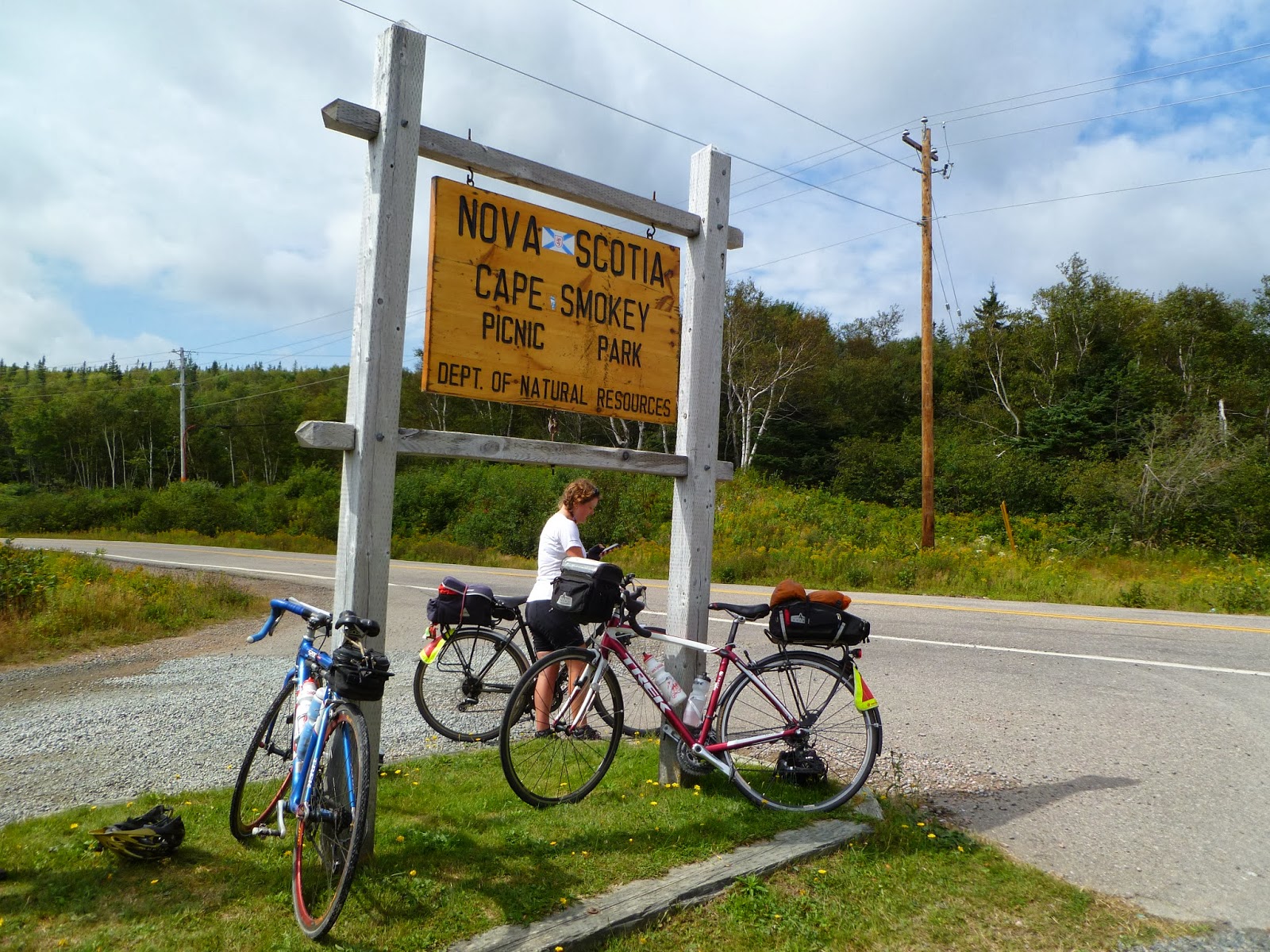
From Ingonish we climb to the Cape Smokey lookout (366 metres). It's a relatively easy climb but a challenging descent that ends with a switchback turn. North River, our destination for this day is at the end of a long estuary on St. Ann's Bay. At the head of the estuary is a hiking trail to the longest waterfall in Nova Scotia at 32 metres. It's a 9-km hike each way to the falls.
Back to Sydney
Leaving North River, it's not far to the Gaelic College, an institution devoted to teaching Scottish culture and music. Demonstration sessions open to the public include kilt-making, Celtic music and dance. We're on the Trail for a short while longer then it is overland to Sydney.
Tour Summary Dates and Fees
- Dates: TBA 2022
- Total amount includes Registration Fee ($150.00) and Deposit ($150.00) which are non-refundable (please refer to our cancellation policy)
- Harmonized Sales Tax (HST).
- Single room option may be limited. We are not able guarantee ensuite bathrooms.
- 8 nights indoor accommodation at motels, hotel and Inns.
- 1 rest day
- 6 breakfasts
- 1 dinner
- Fruit and snacks on riding days
- Total Distance — 440 km (270 mi)
- Daily Average — 73 km (45 mi)
- Longest Day — 90 km (56 mi)
- Riding Days — 6
- Rest Days — 1
Fees are per person in Canadian funds, double accommodation
| Type | Fee | HST | Total |
|---|---|---|---|
| Tour Fee | $1675.00 | $251.25 | $1926.25 |
| Optional Single Supplement | $595.00 | $89.25 | $684.25 |
Accommodation & Meals
Distances and Rating
Challenge Level: Three out of four Cogs (medium to hard challenge)